GET Group indirect owner Christian Comair has extensive experience in the supervision and construction of large-scale public works projects, including turn-key construction projects, water supply, marine works, and waste water treatment plants. An expert in quality control, works procedures, and direction of teams in multi-site projects, Kristian Comair provides technical assistance in all hydraulic issues, as well as liaising with the public and organizing and conducting meetings between contractors and acting authorities. This article will take a closer look at multi-project management, providing strategies to help projects stay on track and deliver on time.
Multi-project management involves the simultaneous planning, management, and control of multiple projects. Its goal is to create synergy between projects, distributing resources effectively and achieving strategic objectives more efficiently. Multi-project managers serve as a superordinate authority, providing a global strategy to ensure the smooth running of projects. The attached video takes a closer look at multi-project management in the construction industry.
Simultaneous management of multiple projects equates to increased complexity. Due to the diversity of projects, multi-project managers must adopt different methods and strategies to meet different challenges in individual projects. For example, not all projects can be implemented with the same intensity at the same time. It is therefore crucial for multi-project managers to prioritize projects according to their urgency, resource requirements, and strategic relevance.
Allocation of limited resources—key among them budget and personnel—is a central task. Overloads and bottlenecks must be avoided. Multi-project managers must ensure that the objectives of each project are clearly designed and coordinated and that timeframes are realistic.
Through efficient resource management and targeted planning, multi-project managers ensure that financial resources, materials, and personnel are distributed in line with requirements without disadvantaging or overburdening individual projects. This not only increases productivity but avoids unnecessary costs. Risk management must be implemented at an early stage to identify and evaluate potential problems. Forward-looking risk analysis paves the way to put in place mitigating measures or avoid problems entirely, reducing negative impacts on both individual projects and the entire portfolio.
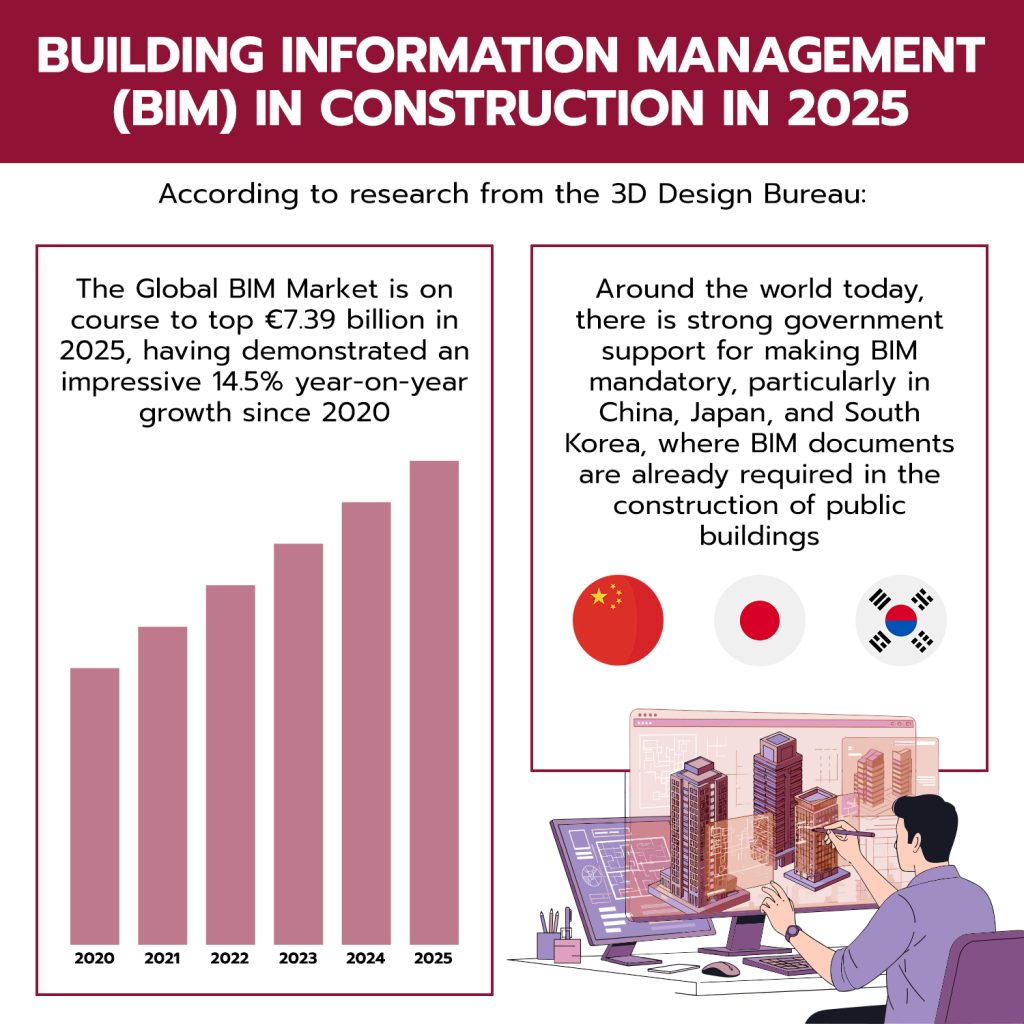
Multi-project management methods are integral to successful project implementation. Coordinating resources, priorities, and time efficiently, multi-project management minimizes conflict between parallel projects. Multi-project management ensures that business objectives are achieved despite limited capacities and complex dependences by promoting transparency and strategic alignment between all the various parties. The attached infographic contains some interesting statistics on the increased adoption of building information modelling (BIM) technology to help construction projects run smoothly.